he London West End classic Les Misérables is special for Chinese musical theatergoers. In 2002, the production became the first Western musical to be staged in China, making its debut in Shanghai. From January 1, 2026, an all-star cast from the West End, all of them having performed in Les Misérables or The Phantom of the Opera, launched their China tour in Shanghai.
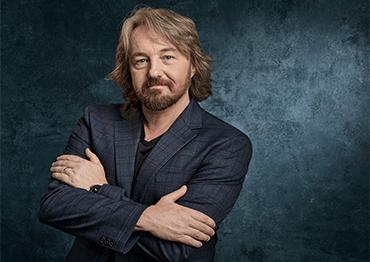
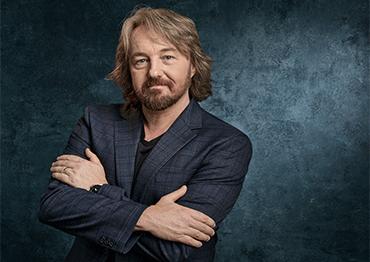
The production, Unmasked, is led by Welsh tenor John Owen-Jones, who still retains the world record for the youngest actor to have played Jean Valjean at the age of 26 in 1998, as well as playing the Phantom the most times in The Phantom of the Opera (nearly 2,000 times) in the history of the West End. He is also the only actor to have played Jean Valjean in both the West End and on Broadway.
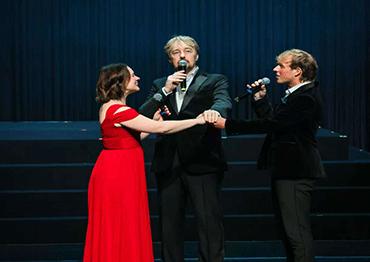
Songs from Les Misérables and The Phantom of the Opera are highlights of the brand-new show, including “I Dreamed a Dream” and “Bring Him Home” from Les Misérables, and “All I Ask of You” and “Music of the Night” from Phantom, as well as songs from other musicals like The Great Gatsby, Wicked and Jersey Boys. West End stars including Gina Beck and Joseph Claus are part of the cast.
Owen-Jones made his China debut in January 2020 in Shanghai with the two Broadway stars Earl Carpenter and Jeremy Secomb in a musical called Three Phantoms, which featured classic songs from The Phantom of the Opera, Les Misérables and Beauty and the Beast. He held concerts in four Chinese cities in 2024, including Beijing, Shanghai, Nanjing in Jiangsu Province and Changsha in Hunan Province.
This is Owen-Jones’s third tour in China, which also took him to Beijing, Hangzhou in Zhejiang Province, Xiamen in Fujian Province and Shenzhen in Guangdong Province.
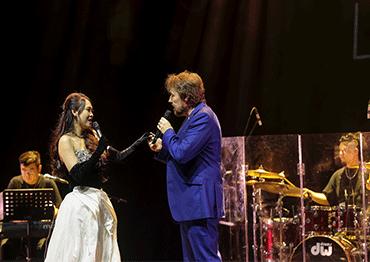
His new album, Voyager, will be released in 2026. The first track, from The Phantom of the Opera, is already available to download, featuring Chinese traditional folk music. In his 2024 concert in China, Chinese performer Pan Hangwei played the role of female protagonist Christine in Phantom.
Musical theater is increasingly popular with young Chinese audiences. According to a report released in mid-December by the China Association of Performing Arts and Beijing Tianqiao Performing Arts Center, there were 19,700 performances in 2025, which attracted nearly 8,185,900 theatergoers and generated 1.8 billion yuan (US$256m) in box office revenue, growing by 15 percent, 7.6 percent and 10.4 percent respectively from 2024. Shanghai, known as the musical theater capital of China, dominated the country’s musical market in 2025, with 38 percent of the performances, 42 percent of box office revenue and 44 percent of theatergoers, far more than Beijing, the second-largest market. The two cities combined account for 60 percent of box office revenues and audiences, and half of all performances nationwide, the report shows.
In an interview in London ahead of his China tour, Owen-Jones spoke about his experiences when collaborating on musical production and performances and how Chinese artists and Western producers can boost the sector together.
China News Service: With decades of experience in musical theater across Europe, North America and China, what is it about the blend of storytelling, musicality and perfor-mativity in musical theater that allows it to transcend language and regional barriers to become a bridge for cultural exchange between East and West?
John Owen-Jones: Music is an international language and so is storytelling. Even though musical theater is an art form that originated in the West (particularly in the UK and the US) it shares its roots with ancient art forms from many other cultures. Every country has its own way of telling stories and creating music, and musical theater has managed to bridge cultures by always being open to new ways of telling stories through music. It’s not bound by any strict rules. For example: France never really had a history of musical theater but did have a rich heritage of storytelling through theater, dance, comedy and opera. Then along came [Alain] Boublil and [ClaudeMichel] Schönberg and they took what they knew from their country’s artistic heritage, what they loved from American musical theater, and collaborated with a British producer, and that blend of influences led them to create one of the greatest musicals ever written: Les Misérables.
This kind of collaboration has started happening in China too and I believe it’s only a matter of time until someone in China finds the right music and the right story to create the next Hamilton, Wicked or Phantom. The future of musical theater lies in this very type of collaboration.
CNS: From your first performance in China to the Unmasked tour, what changes have you observed in Chinese audiences’ understanding and appreciation of Western musicals? Does this shift demonstrate the cross-cultural appeal of musical theater?
JOJ: There is definitely a passion for Western musicals in China and there seem to be more and more people understandably finding a love for it. The audience members I meet are crazy for it! Excitingly for those audience members, there’s a huge library of great Western musicals that audiences in China are yet to see but even more excitingly I also see more and more new work being created in China.
A friend of mine, the actress Li Tong, is always working on different Chinese-led projects and I’m amazed by the varied nature of the shows she works on. It’s exciting for us performers too as we get the chance to find new ways of telling stories to new audiences.
CNS: You have adapted excerpts from Western classics like The Phantom of the Opera using Chinese folk music and collaborated with Chinese musical theater actors. What inspired this idea? How does this creative and performance format achieve a cultural resonance that is greater than the sum of its parts?
JOJ: I was researching different music for my upcoming album Voyager and I stumbled across an instrumental version of the song The Phantom of the Opera on YouTube that was performed by Chinese artists with traditional Chinese instruments.
I found it really inspiring and thought to myself – what if that same thing was done but with a mix of British and Chinese language vocals added? I’m always looking for new, exciting ways to tell stories and this seemed like a great way of combining two very different musical cultures musically. It thrilled me to take two things that no one had really put together before and create something new and exciting that would appeal across cultures.
CNS: Characters you’ve portrayed, such as Jean Valjean and the Phantom, are rooted in Western historical contexts and explore universal human themes, yet they resonate deeply with Chinese audiences. How do you adjust your performance to make these Western roles more relatable and emotionally accessible to Eastern audiences?
JOJ: Honestly, I don’t adjust my performance at all. All I can do is try to connect with audiences on an emotional level by telling the story in the most truthful and resonant way I can. Hopefully they find something in what I do that has a truth for them and moves them.
CNS: There are differences between Chinese and Western musicals in creative logic like narrative pacing or emotional expression, and artistic forms, like musical styles, and stage design. In your view, what is the key to effective integration, preserving local characteristics or seeking common expression? How can a balance be achieved?
JOJ: I think seeking something in common (and celebrating differences) is the only way to connect with someone from a different culture. No matter who we are or where we come from, we are all human and will have similar human life experiences. When two different musical cultures clash, the trick is to help them clash in some kind of harmony and by doing so find a universal theme in the storytelling that appeals to audiences. So if you have a story with universal themes it is much easier to connect across cultures.
I have seen shows in other languages that have moved me – and even though I didn’t understand the language I understood the emotional aspect of the story. Balance can be achieved by telling the story well. It always comes back to the storytelling in my opinion.
CNS: As a representative of Western musical theater, in what ways do you think Western professionals can more deeply engage in the development of Chinese musicals to foster two-way exchange, such as in talent cultivation and creative collaborations?
JOJ: That’s difficult for me to answer as I can’t really speak on behalf of others, but it would be nice to see Western producers who have big shows running in China use Western actors who are working on those shows in China to lead masterclasses for local students, or use those actors to run new writing and development workshops with Chinese creators.
It could be a two-way flow of ideas and collaboration. I’d also like to see more producers creating Chinese language versions of their hit shows to help open up the art form to a larger Chinese audience.
CNS: What suggestions do you have for Chinese original musicals to reach a global audience? For instance, in terms of story selection, artistic presentation and international promotion, what aspects should be emphasized?
JOJ: There is sadly no magic formula on how to make a successful musical, but it is only a matter of time until a Chinese musical breaks ground and becomes popular globally. I would suggest that if you are an author or composer from China, you keep writing stories and music that excites you. Write for yourself and an audience may find you. One day you will find the right combination of elements to make a musical that also excites others all over the world. If it was easy then everyone would do it!
 Old Version